Unknown's avatar

All posts by Callon Campbell [MVP]

Uncategorized

#CognitiveServices – How to create audio files for Custom Speech Service (#CRIS)

elbruno's avatarEl Bruno

Hello!

A few days ago I was asked about an easy way to create audio files to be used as datasets in Custom Speech Service (CRIS). As I mentioned in a previous post, the audio files must have special features, so it is important to create them correctly.

Note: the files are WAVs files, mono and another pair of details makes it not easy to create them in a single step.

Although there are several ways to create these files, this is the one I use and it works.

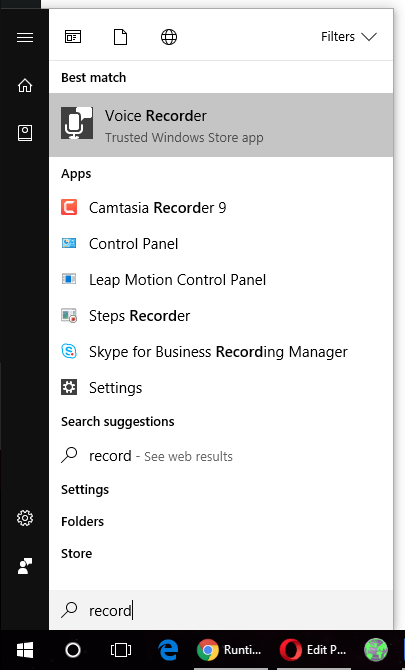
  • To record the audio I use an app that comes by default in Windows: Voice Recorder

Clipboard02

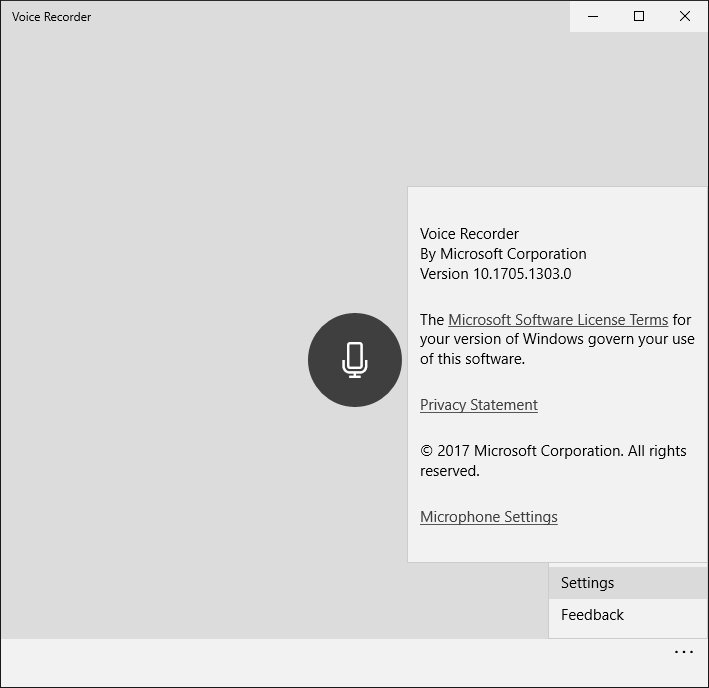
  • I guess I don’t need to explain how the app works. Just press the microphone button. Nor do we expect many options in the Settings section.

Clipboard03

  • Once we have recorded a session, we can access the list of recordings. If we see the record path…

View original post 186 more words

Uncategorized

CosmosDB: The New DocumentDB NoSQL Database in Microsoft Azure

Chris Pietschmann's avatarBuild5Nines

DocumentDB has been around for awhile now in Microsoft Azure. It’s a Document based, NoSQL database in the cloud. There’s been tons of advancements to the service over time, including MongoDB API support so you can use it in place of MongoDB for existing code bases. It’s always been called “DocumentDB” since initial release of the service, but for a time it was labeled as “NoSQL (DocumentDB)” in the Azure Portal. It seems there was some indication that Microsoft wasn’t happy with the name they first chose.

Today, we wake up in the morning to updates that have been made to the Azure Portal where DocumentDB is no longer there. Well, it actually is there, but has undergone renaming / rebranding. From this day forward, DocumentDB will no longer be called DocumentDB. Instead we will call this NoSQL, Document based database service….. Azure Cosmos DB.

From this day forward, DocumentDB…

View original post 388 more words

Azure

Tips to managing your Azure subscription

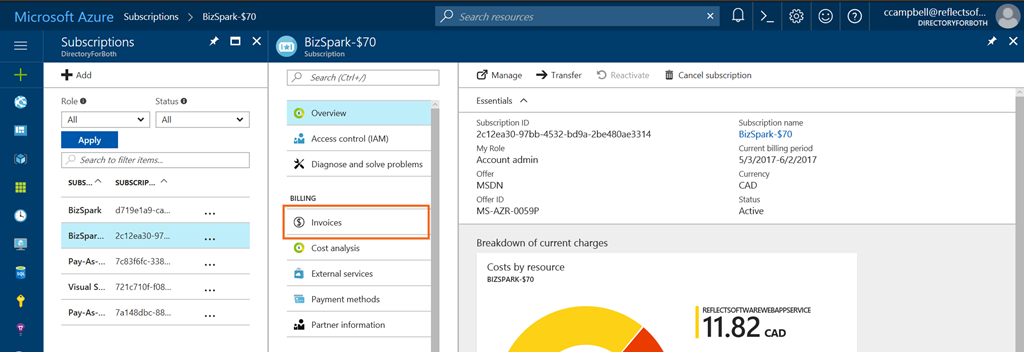
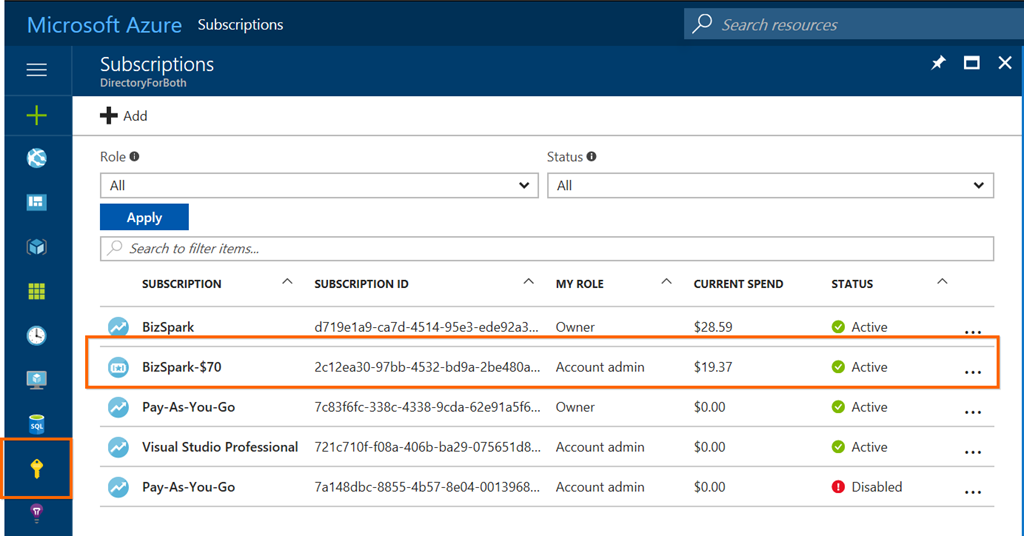
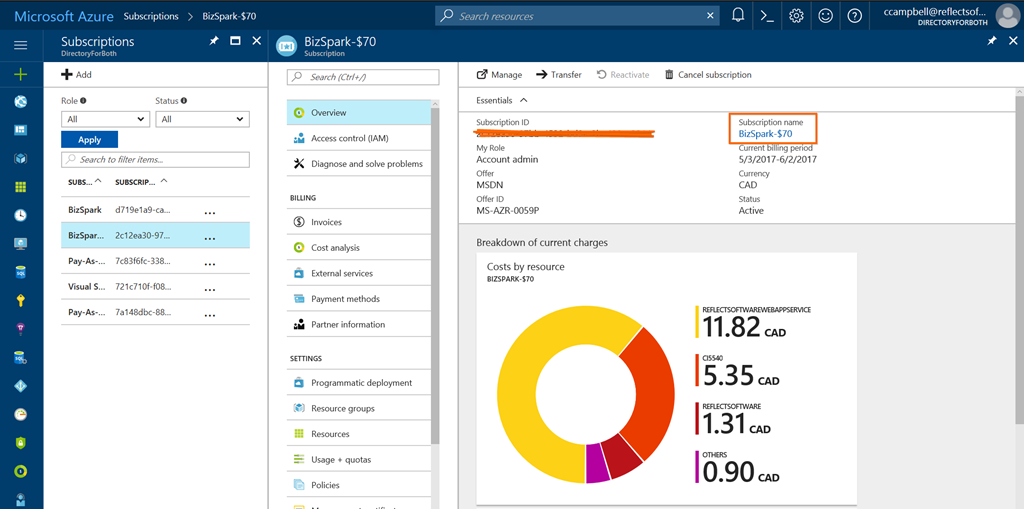
The following are a few tips for managing your Azure subscription. Start by navigating to the Subscription blade and then click on a Subscription you wish to manage:

image

From here you have a clear overview of your Subscription ID and the current spending with a breakdown by resource.

Renaming your subscription

To rename your Subscription, in my case I want to change it from “BizSpark-$70” to “MSDN-Professional-$70” as that is a new MSDN subscription I purchased and changing the name properly reflects that subscription and the Azure credits associated with it.

To rename the Subscription, click on the Subscription name:

image

You can now enter in a new Subscription name and when you’re done click on the Save button. The subscription name change can take up to 10 minutes to be reflected on the Azure portal.

image

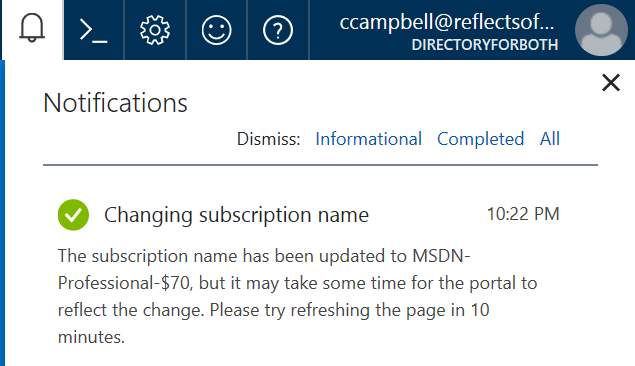
After the subscription has successfully been renamed, you’ll receive an alert:

image

Configuring email invoices

The Azure portal recently allowed you to opt in and configure email invoices. This means instead of receiving an email each month that your invoice is ready which required you to login to the Azure portal, now you can have the invoice emailed to you instead, which is awesome!

If you haven’t already setup email invoices, from the Azure Subscription blade, click on Invoices:

image

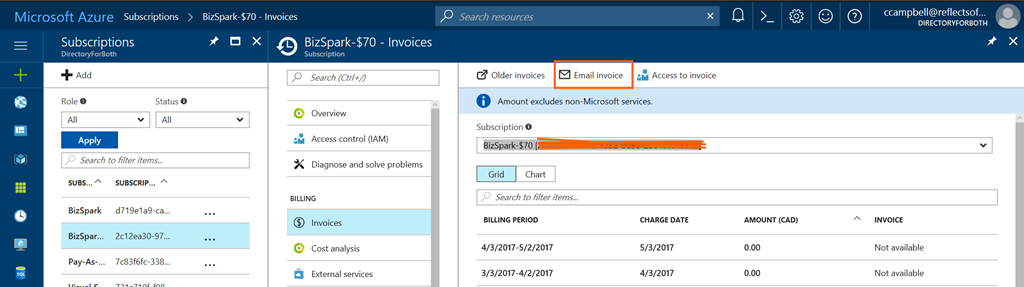
From the Invoices blade, you can now click on the Invoices button and then from here you can opt-in and configure it:

image

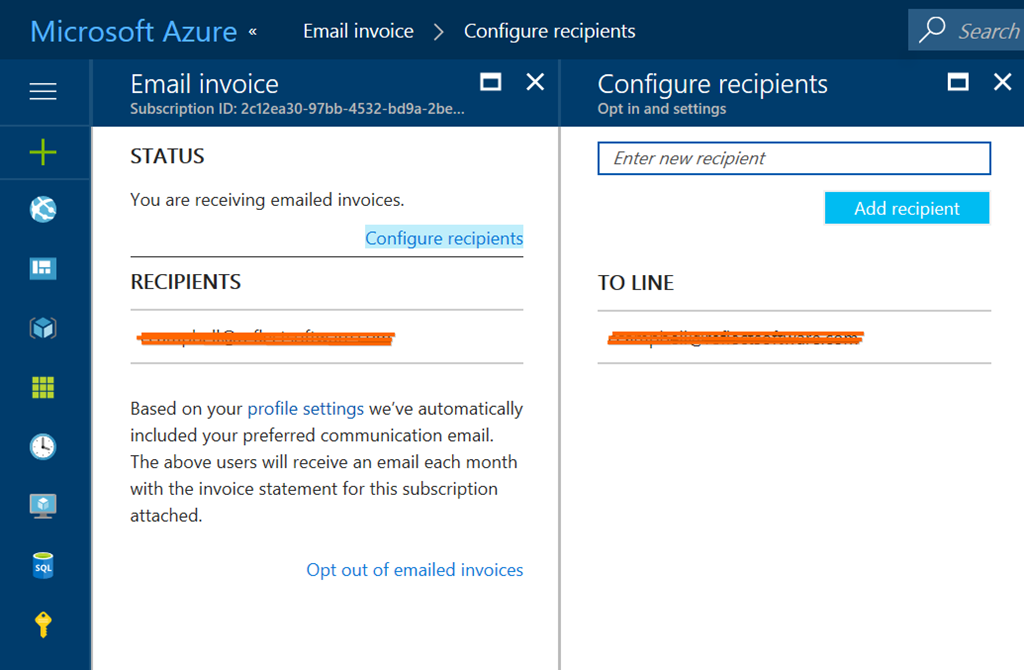
If you already opted in, you can review your current configuration and also configure the list of recipients (maybe you want the invoice sent to your accounting department also). When done, click the Done button at the bottom:

image

Enjoy!

Resources

Azure Portal

DatabaseDevelopment

SQL Server Management Studio 17.0

There is a new release of SQL Server Management Studio (SSMS) now available – version 17.0. It feels like yesterday when SSMS 16 was released (June 2016). I’m not going to complain as it’s refreshing to see such the constant updates to SSMS now that it’s not tied in with the database engine installer.

To get the latest version, head to the download page and install the web-installer. SSMS 17 will install side-by side with previous versions of SSMS.

This latest release includes a lot of new functionality, namely with support for connecting to SQL Server on Linux. Please see the full SSMS changelog for a complete listing of enhancements and bug fixes. Sadly this release still doesn’t support the Dark theme. Hopefully this is something they add in a future release.

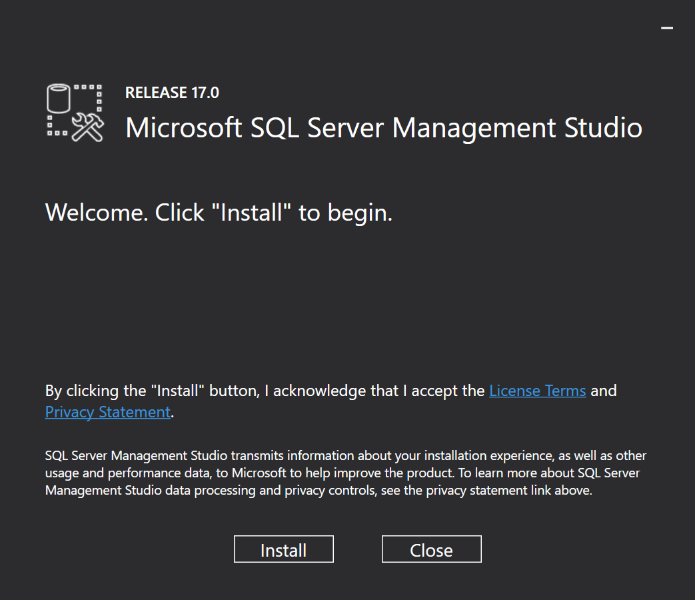
Installing SSMS 17:

sshot-280

Updated splash screen:

image

SSMS 17 icons have been updated to be consistent with VS Shell provided icons and support High DPI resolutions:

sshot-284

One of the nice additions to this release is the inclusion of “Presentation Mode”. There are 3 new tasks available via the Quick Launch (Ctr-Q):

  • PresentOn – Turns on presentation mode where the editor and environment fonts are larger
  • PresentEdit – Allows you to edit the presentation font sizes
  • RestoreDefaultFonts – Reverts back to the default settings

If you  are familiar with these commands in Visual Studio then you will  notice that there is currently no PresentOff command. Use RestoreDefaultFonts to turn off Presentation Mode.

Enjoy!

References

Download SSMS
Download SQL Server Data Tools (SSDT)
SSMS Changelog
SSMS Release Notes

Azure

Azure Functions Updates

New Release of Azure Functions

A new release of Azure Functions is now available, version 1.0.10917. The main things in this release are:

  • Application Insights integration (Preview)
  • Native TypeScript support (preview)
  • Improvements to binding extensibility for binding authors
  • JavaScript transpiler API/extension model
  • Miscellaneous bug fixes and improvements

New Experience for Azure Functions

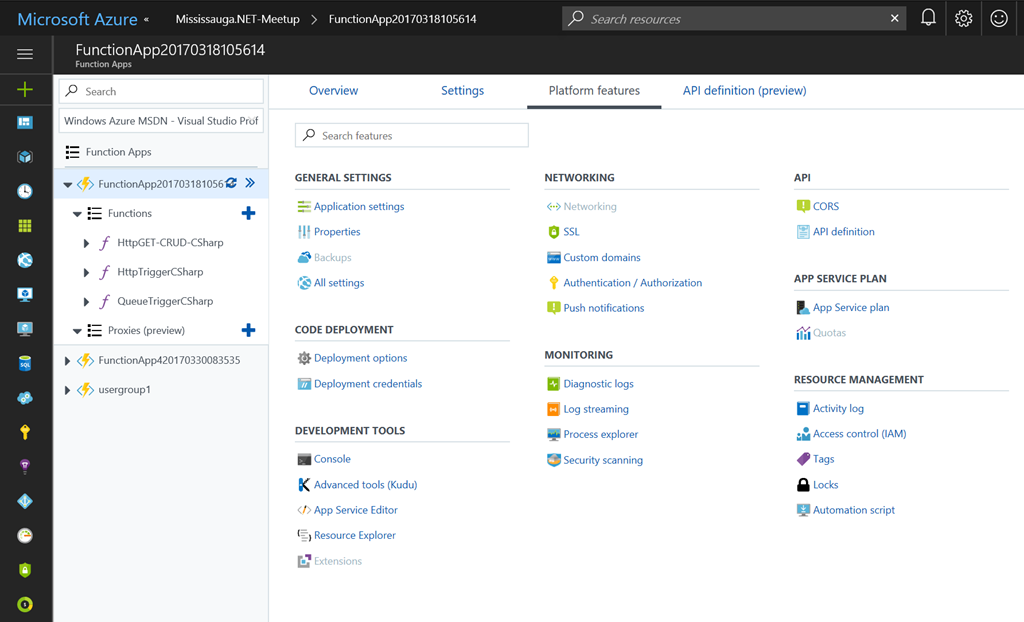
The Azure Functions portal was also completely re-vamped with a new UI experience. Some of the improvements are:

  • A dedicated browse blade for Function Apps.
  • A tree view that allows viewing and managing multiple Function Apps
  • Filters on subscription and app name, as well as an option to scope the view to just one app
  • One-click access to all App Service platform features
  • A convenient way to manage features that have already been configured
  • Overall UI enhancements to be more consistent with the rest of the Azure portal

image

You can read more about the portal changes in the announcement blog.

Enjoy!

References

https://blogs.msdn.microsoft.com/appserviceteam/2017/05/01/april-2017-app-service-update/

Azure

Azure Functions now with Application Insights integration

Earlier this month Azure Functions was updated to have direct integration with Application Insights and is currently only available on the “beta” version of Azure Functions. At this time it’s recommended to only try this out in non-production Azure Function apps until it’s a more stable release.

Getting Started

Before we can enable Azure Function Application Insights integration, we will need to setup an Application Insights instance. If you already have one skip to the next step.

  1. Create an Application Insights instance and Application Type should be General. Once your Application Insights is setup, copy the instrumentation key which we’ll need in the next step.
    image
    image
  2. Next you will need to update your Azure Function Application Settings to configure your function to run under the “beta” version and then to set your Application Insights Instrumentation Key.image
  3. Now go to Application Settings and then update App Setting “FUNCTIONS_EXTENSION_VERSION” from “~1” to “beta” and then add a new key named “APPINSIGHTS_INSTRUMENTATIONKEY” and set the value to the Application Insights Instrumentation key you copied in step 1. Now click Save to update your Azure Function.
    image 

Once this is done, your Application Insights instance will start collecting telemetry from your Azure Function without any code changes.

Using Application Insights

Going to your Application Insights, you can start to see some metrics showing up on the overview blade:image

Live Metrics Stream

You can get a lot more insights to real-time telemetry from the Live Metrics Stream to see what’s happening right now:
image

Analytics

Another great resource of Application Insights is the Analytics portal, which provides you the ability to write your own custom queries.
image

Alerts

The previous two options are great to see what is happening or what happened historically, but Alerts will tell you what’s happening. I suggest you checkout Alerts from the Application Insights blade, where you can define alerts based on a wide array of metrics.

image

Summary

You can now add Application Insights to your Azure Functions with minimal effort, which is a powerful tool for monitoring your applications. Keep in mind that this is currently only available in the “beta” version of Azure Functions, but is something that should be coming to the production release in the near future now that it’s been merged into the develop branch on github.

Enjoy!

References

Azure Functions integration with Application Insights

Azure Functions now has direct integration with Application Insights

Application Insights

Live Metrics Stream docs

Uncategorized

Using Azure Storage Queues from .NET

Chris Pietschmann's avatarBuild5Nines

Azure Storage Queues provide an easy to implement messaging communication mechanism for reliably passing messages to/from different components of a single application or multiple applications. Storage Queues have an HTTP/HTTPS API to allow for support of any development platform; however, Microsoft does provide a .NET SDK to make it even easier to implement from C# or other .NET languages.

View original post 419 more words

Uncategorized

Intro to Azure for Developers FREE Webinar On-Demand from Opsgility

Unknown's avatarBuild5Nines

The other day I hosted a FREE Webinar with Opsgility that provides an Introduction to Azure for Developers. In this webinar I went over an introduction to what IaaS, PaaS, and SaaS are. Then I dove into the Azure Portal and showed how to create IaaS (Infrastructure as a Service) VMs with Windows and Linux, as well as how to remote into those VMs with Remote Desktop and SSH; respectively. I also went into deploying a Web Application into an Azure Web App PaaS (Platform as a Service) service directly from within the Visual Studio IDE, and I even showed how you can easily deploy a website directly from Github into an Azure Web App as well! I also discussed Azure SQL Database (“Database as a Service”), as well as a few additional services and features.

I encourage you to watch the entire webinar recording to see the whole demo…

View original post 25 more words

Uncategorized

Top 10 Tricks to Save Money with Azure Virtual Machines

Chris Pietschmann's avatarBuild5Nines

This post contains 10 tips and tricks you can use to save money on your Virtual Machines (VMs) running in the Microsoft Azure cloud. The cost analysis of the cloud can be scary at first, and it’s actually one of the reasons companies are shy to start adopting the cloud. Once you know these tricks you’ll feel confident that you won’t overspend and go broke in Microsoft Azure.

Some of these tips are almost secrets, as they aren’t really talked about anywhere. I know these from my years of experience working with Microsoft Azure and getting to know many of the ins and outs of the platform. So, read below, and benefit from my years of Azure experience in just a few minutes.

Using these tips will certainly help you save your company or organization money, and will likely impress your boss!

View original post 1,814 more words